

1:15
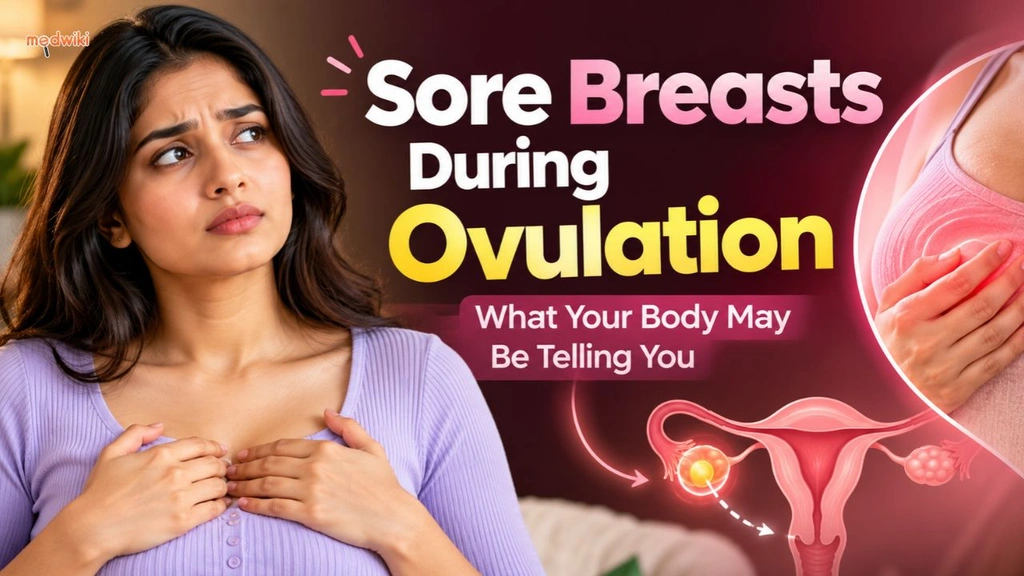
Breast changes can occur at different stages of the menstrual cycle, andsore breasts and ovulation can sometimes occur together. Hormonal changes around ovulation may cause breast tenderness, swelling, or nipple sensitivity in some people.Understanding the connection betweenbreast pain and ovulation can help explain why these symptoms appear at certain times of the menstrual cycle. However, breast tenderness can also occur before a period, during pregnancy, or because of other factors.The timing, severity, and duration of breast discomfort can vary from one person to another. Learning howovulation breast pain differs from other types of breast tenderness can help you better understand changes that occur throughout the menstrual cycleIs Breast Pain During Ovulation Normal?Yes,breast pain during ovulation can occur as a normal part of the menstrual cycle. Hormones such as estrogen andprogesterone change throughout the cycle, and these changes may affect breast tissue.Some people may notice mild tenderness, fullness, swelling, or sensitivity around the middle of their cycle. The symptoms may last for a short period and often improve as hormone levels change.What Does Ovulation Breast Soreness Feel Like?Ovulation breast soreness can feel different from person to person. Common sensations may include:Tenderness: Breasts may feel more sensitive or uncomfortable, especially when touched or pressed.Heaviness: The breasts may feel fuller or heavier than usual during hormonal changes.Mild aching: A dull or temporary ache may occur in one or both breasts.Swelling: Some people may notice temporary breast swelling or fullness around ovulation.Nipple sensitivity: The nipples may feel more sensitive or sore than usual.General discomfort: Breast discomfort may become more noticeable during movement or physical activity.These sensations are usually temporary and may improve as hormone levels change during the menstrual cycle. However, persistent or severe breast pain should not automatically be attributed to ovulation.Why Do Breasts Hurt During Ovulation?The main reason forbreast tenderness and ovulation is the hormonal fluctuation that occurs during the menstrual cycle. Estrogen rises before ovulation, while progesterone increases after ovulation.These hormonal changes can temporarily affect breast tissue and cause sensations such as tenderness or swelling. The intensity of symptoms can vary from one person to another and may also change from cycle to cycle.What Are the Common Symptoms of Ovulation-Related Breast Pain?Ovulation breast pain can feel different depending on the person. Some people may experience mild discomfort, while others may notice more noticeable breast sensitivity.Common symptoms may include:Breast tenderness: The breasts may feel more sensitive or uncomfortable when touched.Breast swelling: Hormonal changes may cause a temporary feeling of fullness or swelling.Nipple soreness: The nipples may become more sensitive during hormonal changes.Heaviness or fullness: Some people may notice that their breasts feel heavier than usual.Mild aching: A dull or temporary ache may occur in one or both breasts.These symptoms can occur around ovulation but are not a reliable way to confirm that ovulation is happening. Other menstrual-cycle changes may occur at the same time.Is Breast Pain During Ovulation the Same as PMS?Breast pain before period and breast tenderness around ovulation can feel similar, but they occur at different points of the menstrual cycle. Ovulation generally happens around the middle of the cycle, while PMS occurs after ovulation and before the next period.Hormonal changes are involved in both situations, which can make the symptoms difficult to distinguish based on breast discomfort alone.The timing of the symptoms may provide a useful clue. If tenderness regularly appears around the middle of the menstrual cycle, it may be associated with ovulation, while symptoms that occur consistently before menstruation may be more related to PMS.Is Breast Tenderness a Sign of Ovulation or Pregnancy?Breast tenderness and ovulation can sometimes occur around the middle of the menstrual cycle, while breast tenderness can also be an early pregnancy symptom. Because both situations involve hormonal changes, the sensations can be difficult to distinguish.Timing can provide some context, but breast pain alone cannot confirm pregnancy or ovulation. If pregnancy is possible and a period is delayed, a pregnancy test may provide more useful information.What Can Cause Breast Pain Besides Ovulation?Althoughhormonal breast pain can occur during ovulation, breast discomfort may have several other causes. Identifying when the pain occurs and whether other symptoms are present can help provide useful context.Possible causes include:PMS: Hormonal changes before menstruation can cause breast tenderness and swelling.Pregnancy: Hormonal changes during early pregnancy may cause breast sensitivity.Medications: Some medicines can contribute to breast tenderness as a side effect.Physical activity: Strain involving the chest muscles may sometimes feel like breast discomfort.Ill-fitting clothing: Poorly fitting support garments may contribute to discomfort during movement.Breast conditions: Certain breast conditions can cause localized or persistent pain.Because breast pain has different possible causes, recurring or unusual symptoms should not always be assumed to be related to ovulation.How Can You Relieve Breast Pain During Ovulation?Mildbreast pain and ovulation symptoms may improve as hormonal changes settle. Simple measures can sometimes make temporary discomfort easier to manage.Some approaches include:Wear comfortable support: A well-fitting supportive bra may reduce discomfort during daily activities.Use a warm or cool compress: Applying a comfortable temperature to the area may help relieve temporary tenderness.Avoid unnecessary pressure: Reducing activities that cause discomfort may help the breasts feel more comfortable.Track your menstrual cycle: Recording when breast tenderness occurs can help identify whether it follows a recurring pattern.Maintain healthy sleep habits: Adequate rest can support overall well-being during menstrual-cycle changes.If breast pain is severe, persistent, or repeatedly interferes with everyday activities, it is better to discuss it with a healthcare professional.When Should You Be Concerned About Breast Pain During Ovulation?Most mild, temporarybreast tenderness during ovulation is not usually a cause for concern. However, breast pain that is new, persistent, severe, or associated with other unusual changes may need medical evaluation.Consider speaking with a healthcare professional if:Breast pain persists for a prolonged period or keeps getting worse.Pain is consistently limited to one specific area.A new lump or noticeable change in the breast is present.There are unusual nipple changes or discharge.Breast changes continue beyond the expected menstrual-cycle pattern.A healthcare professional can evaluate the symptoms and determine whether additional assessment is needed.ConclusionSore breasts and ovulation can occur together because hormonal changes during the menstrual cycle may temporarily affect breast tissue. Tenderness, swelling, fullness, and nipple sensitivity are some symptoms that may appear around this time.At the same time, breast pain is not specific to ovulation. PMS, pregnancy, medications, physical activity, and other causes can produce similar symptoms, so the timing and overall pattern are important to consider.Ifbreast tenderness and ovulation symptoms are mild and temporary, they may simply be part of the menstrual cycle. Persistent, severe, or unusual breast changes should be discussed with a healthcare professional for appropriate evaluation.FollowMedwikifor more information on reproductive health, fertility, periods, and related health topics.Frequently Asked Questions1. Can ovulation cause sore breasts?Yes.Sore breasts can occur around ovulation because hormonal changes may temporarily affect breast tissue and cause tenderness or sensitivity.2. Why do my breasts hurt during ovulation?Breast pain during ovulation may occur because reproductive hormones such as estrogen and progesterone change throughout the menstrual cycle.3. Is breast tenderness a sign of ovulation?Breast tenderness can occur around ovulation, but it is not a reliable way to confirm ovulation because similar symptoms can happen before a period or during pregnancy.4. Is breast pain during ovulation the same as PMS?Not necessarily.Ovulation breast pain occurs around the middle of the menstrual cycle, while PMS-related breast tenderness usually occurs after ovulation and before the next period.5. Can breast tenderness during ovulation mean pregnancy?Breast tenderness can occur during both ovulation and early pregnancy. Therefore,breast pain alone cannot confirm pregnancy.6. How can I relieve breast pain during ovulation?Wearing comfortable support, using a warm or cool compress, avoiding unnecessary pressure, and tracking your menstrual cycle may help manage temporary breast discomfort.7. When should I see a doctor for breast pain?Consider medical advice if breast pain is severe, persistent, localized, or accompanied by a new lump, unusual nipple changes, discharge, or other concerning breast changes.

1:15
Questions about sexual health are common, but many people still feel uncomfortable discussing them. One topic that often leads to confusion is masturbation. People may wonder whether it is healthy, whether itaffects testosterone or sperm, or whether doing it frequently can cause problems. Medical evidence generally considers masturbation a normal part of sexuality, although experiences and frequency vary from person to person.Understanding the facts can help separate genuine health information from common myths. This guide explains male masturbation, its potential benefits, effects on sexual and reproductive health, healthy practices, and situations in which it may become a concern.What Is Male Masturbation?Male masturbation is a form of sexual self-stimulation that may lead tosexual pleasure or orgasm. It is a common part of sexual development and can occur whether or not a person is sexually active with a partner. Some people masturbate regularly, some occasionally, and others do not masturbate at all. There is no single pattern that applies to everyone.As part of male sexual health, masturbation may also help a person become more aware of their sexual responses and feelings.Is Masturbation Good for Health?For most people, masturbation is considered a normal and generally healthy sexual behaviour. Research and medical guidance associate it with several possible physical and emotional benefits, although these effects can differ between individuals.One commonly reported benefit is relaxation. Sexual activity and orgasm may help some people release physical tension and feel calmer. Masturbation may also help with sleep, particularly when relaxation follows orgasm.However, masturbation should not be presented as a treatment for medical conditions. Its possible benefits do not replace professional care, medication, exercise, sleep, or other evidence-based approaches to health.What Are the Benefits of Masturbation for Men?Masturbation for Stress ReliefMasturbation may help some people relax by reducing physical and sexual tension. It may also support temporary mood improvement and relaxation.May help reduce stress and tensionCan promote relaxationEffects vary between individualsMasturbation for Better SleepSome people may find it easier to relax and fall asleep after masturbation. However, sleep quality also depends on stress, lifestyle, physical health and sleep habits.May promote relaxation before sleepCould help some people fall asleepNot a treatment for ongoing sleep problemsSexual Well-Being and Self-AwarenessSolo masturbation may help people better understand their sexual responses and preferences. This can support greater awareness of sexuality and overall sexual health.Helps increase sexual self-awarenessMay improve understanding of personal responsesCan support healthy sexual communicationPossible Prostate-Related BenefitsSome studies have found an association between more frequent ejaculation and a lower risk ofprostate cancer. However, this does not prove that masturbation prevents prostate cancer.Research has explored ejaculation and prostate healthEvidence is mainly observationalMasturbation should not be considered a prostate cancer prevention methodDoes Masturbation Affect Testosterone, Sperm or Fertility?One of the most common concerns about male masturbation involves testosterone, sperm and fertility.TestosteroneMasturbation does not appear to cause a permanent decrease in testosterone.Testosteronelevels naturally vary due to factors such as age, sleep, stress, health and medications.Does not permanently lower testosteroneTestosterone naturally fluctuatesClaims about lasting weakness are not medically supportedSperm and SemenSperm are continuously produced in the male reproductive system, while semen is the fluid released during ejaculation. Masturbation does not permanently deplete sperm.Sperm production continues naturallySemen volume can temporarily varyFrequent ejaculation does not permanently use up spermFertilityMasturbation is not considered a cause of infertility or permanent sperm loss. Male fertility depends on several factors, including reproductive health, hormones, medical conditions and lifestyle.Does not generally cause infertilitySperm production continues after ejaculationPersistent fertility concerns should be discussed with a healthcare professionalIs Masturbation Good for Prostate Health?Research has explored whether ejaculation frequency may be linked to prostate health. Some observational studies suggest that men who ejaculate more frequently may have a lower risk of prostate cancer, but this does not prove that ejaculation prevents cancer.Research suggests: Higher ejaculation frequency has been associated with a lower prostate cancer risk in some studies.Important limitation: The research included ejaculation through masturbation, intercourse and nocturnal emissions.What it means: More research is needed before saying that masturbation itself protects against prostate cancer.Masturbation is generally considered a normal part of male sexual health, while prostate cancer risk depends on multiple factors such as age, family history and overall health.How Much Masturbation Is Normal for Men?There is no medically fixed number of times a person should or should not masturbate. Some people may masturbate frequently, while others may do so rarely or never. These differences can be normal.Frequency becomes more important when it affects everyday life. For example, masturbation may be a concern if it regularly interferes with school, work, sleep, relationships, responsibilities or other activities.Physical discomfort can also be a sign to take a break and allow the body to recover. The number alone does not determine whether masturbation is healthy.What Does Healthy and Safe Masturbation Mean?Healthy masturbation generally means maintaining personal hygiene, respecting privacy and avoiding actions that cause pain or injury.Some general male masturbation tips for sexual health include:Keep hands and the genital area clean.Avoid actions that cause pain, significant irritation or injury.Stop if there is persistent discomfort.Give irritated skin time to recover.Avoid using objects or practices that could injure the penis or surrounding tissues.Seek medical advice if pain, swelling, bleeding or other unusual symptoms persist.Masturbation is generally a low-risk form of sexual activity, but physical safety still matters. If an injury occurs or symptoms do not improve, medical evaluation is appropriate.Common Myths About Male MasturbationMyth 1: Masturbation causes permanent weaknessThere is no good medical evidence that masturbation causes permanent physical weakness. Feeling temporarily relaxed or tired afterward is different from developing chronic weakness.Myth 2: Masturbation permanently lowers testosteroneMasturbation does not cause a permanent reduction in testosterone. Hormone levels naturally vary for many reasons.Myth 3: Masturbation causes infertilityMasturbation is not considered a cause of infertility or permanent loss of sperm.Myth 4: Masturbation shrinks the penisThere is no established evidence that masturbation causes permanent penis shrinkage. Cleveland Clinic specifically lists penis shrinkage among the claims that research has not supported.Myth 5: Masturbation automatically causes erectile dysfunctionMasturbation itself is not considered a direct cause of erectile dysfunction. Persistent erection problems can have many possible physical and psychological causes and should be assessed by a healthcare professional.Myth 6: Everyone should masturbate a specific number of timesThere is no universal “correct” frequency. Some people masturbate often, while others rarely or never do. What matters is whether it causes physical problems or interferes with everyday life.When Can Masturbation Become a Concern?Masturbation is generally not considered a problem simply because it occurs frequently. The bigger concern is whether the behaviour becomes difficult to control or begins interfering with important parts of life.Consider speaking with a healthcare professional or mental-health professional if masturbation:Interferes significantly with school, work or responsibilitiesRegularly disrupts sleepCauses repeated physical injury or painCreates significant distress or guiltFeels difficult to control despite wanting to stopInterferes with relationships or daily activitiesPlanned Parenthood similarly explains that masturbation may become a concern when it interferes with responsibilities or social life.ConclusionMale masturbation is generally a normal part of male sexual health and does not cause many of the problems commonly described in myths. It may support relaxation, stress management, better sleep and sexual self-awareness, although individual experiences can vary.There is no fixed amount that is considered normal for everyone. What matters is whether masturbation causes physical discomfort or starts interfering with daily activities and well-being. If you experience persistent pain, injury or other concerns, speak with a healthcare professional.FollowMedwikifor more!Frequently Asked Questions About Male Masturbation1. Is masturbation healthy for men?For most people, masturbation is a normal part of sexual health and does not cause serious physical harm. It may also support relaxation and stress relief.2. Does masturbation reduce testosterone?Masturbation does not cause a permanent reduction in testosterone. Testosterone levels naturally fluctuate due to various biological and lifestyle factors.3. Does masturbation reduce sperm count?Masturbation does not permanently reduce sperm production or cause infertility. Semen volume may temporarily vary depending on the timing of ejaculation.4. Can masturbation affect fertility?Masturbation is not considered a cause of male infertility. If you have ongoing concerns about fertility, speak with a healthcare professional.5. Is masturbating every day unhealthy?Daily masturbation is not automatically unhealthy. Frequency varies between individuals and may become a concern if it causes injury or interferes with daily activities.6. Can masturbation help with sleep or stress?Some people find masturbation relaxing and may notice reduced stress or better sleep afterward. However, it should not be considered a treatment for ongoing stress or sleep disorders.7. When should I see a doctor about masturbation?Seek medical advice for persistent pain, swelling, bleeding, injury or changes in sexual function. Professional support may also help if it causes significant distress or interferes with daily life.

1:15
Titanic K2 Capsule is an Ayurvedic wellness supplement marketed to supportenergy, stamina, physical strength, vitality and men's wellness. It is commonly promoted as a power-booster for people looking to support their overall physical performance and vitality.Titanic K2 is also marketed forsexual wellness,libido and physical strength. Its herbal and herbo-mineral ingredients are traditionally associated with different wellness benefits. However, the exact formulation may differ between products, so checking the ingredients and directions on the specific pack is important.What Is Titanic K2 Capsule?Titanic K2 Capsule is marketed as anAyurvedic power-booster and nutritional wellness supplement. Product listings commonly describe it as a preparation intended to support energy,stamina, physical strength and general vitality.Some formulations are also promoted formen's wellness and sexual vitality. The ingredients may include traditionally used herbs and herbo-mineral preparations, depending on the manufacturer and product version.Since different Titanic K2 listings may have different compositions, always check the manufacturer's label for the exact ingredients, recommended use and precautions.What Are theIngredients And Composition in Titanic K2 Capsule?The composition of Titanic K2 may vary between product versions. One listed formulation contains several herbal and mineral ingredients, including:Withania somniferaTerminalia arjunaAsparagus adscendensCrocus sativusAbhrak BhasmaSidh Makardhwaj BhasmaPyrethrum radixSwarna BhasmaThese ingredients are traditionally used in different Ayurvedic preparations for supporting general wellness, vitality and physical strength.Because formulations can differ, it is best tocheck the actual product packaging before use.What Are Titanic K2 Capsule Uses?Titanic K2 is marketed for several wellness and vitality-related purposes.Supports Energy and VitalityTitanic K2 is commonly promoted as apower-booster for energy and vitality. Its herbal ingredients are traditionally used in wellness preparations designed to support physical strength and overall wellbeing.Maintaining good nutrition, regular physical activity and adequate sleep can further support normal energy levels.May Support Physical StaminaTitanic K2 is marketed to help supportstamina and physical strength. It may appeal to people looking for an Ayurvedic wellness supplement as part of their overall fitness and lifestyle routine.Individual responses to supplements can vary, so it is important to use the product according to the manufacturer's directions.Supports Men's WellnessSome Titanic K2 formulations are specifically marketed formen's wellness and vitality. The product is promoted as a power-booster that may support physical strength and overall wellbeing.Marketed for Sexual WellnessTitanic K2 is also promoted in some product listings forsexual wellness, libido and sexual vitality. Certain ingredients used in Ayurvedic preparations have traditionally been associated with male vitality and reproductive wellness.However, Titanic K2 should be viewed as a wellness supplement rather than automatically considered a treatment for a specific sexual health condition.What Are the Benefits of Titanic K2 Capsule?The potential benefits promoted for Titanic K2 are mainly related toenergy, stamina, vitality and men's wellness.Depending on its formulation, Titanic K2 may be used as part of a wellness routine to:Support daily energy and vitalityPromote physical strengthSupport staminaComplement an active lifestyleSupport men's general wellnessPromote sexual wellness and vitalityProvide traditionally used Ayurvedic herbal ingredientsThe experience can vary from person to person, and the benefits depend on the specific formulation and individual health factors.Titanic K2 Capsule Side EffectsTitanic K2 is generally marketed as an Ayurvedic wellness supplement, and some product listings state that no known side effects have been reported.However,any supplement can affect people differently. Possible reactions may depend on the ingredients, dosage, product quality and an individual's health conditions or medicines.If you experience an unusual or persistent reaction after taking Titanic K2, discontinue use and consult a healthcare professional.Products containing herbo-mineral ingredients should be used responsibly, with attention to product quality, preparation and recommended dosage.Who Should Take Care With Titanic K2?Although Titanic K2 is marketed for wellness and vitality, certain people should seek professional advice before using it.Consult a healthcare professional if you:Have an existing medical conditionTake prescription or other regular medicinesHave an allergy to any ingredientHave high blood pressure or a cardiovascular conditionHave liver or kidney problemsAre pregnant or breastfeedingAre planning to use the supplement for a long periodFollowing the product label and recommended serving instructions can help support safe and appropriate use.Can Titanic K2 Be Used for Sexual Wellness?Yes, Titanic K2 ismarketed in some product listings for men's sexual wellness, libido and vitality.Its positioning as a power-booster makes it popular among people looking for Ayurvedic support for physical and sexual vitality. However, sexual health concerns can have many possible causes, so persistent symptoms should be discussed with a qualified healthcare professional.A healthy lifestyle, adequate sleep, regular physical activity and a balanced diet can also contribute to overall sexual wellbeing.What Precautions Should You Take While Using Titanic K2?To get the most appropriate use from an Ayurvedic supplement, keep the following points in mind:Read the product label carefully before use.Check the complete ingredient list.Follow the manufacturer's recommended dosage.Do not assume that different Titanic K2 products have identical formulations.Check the expiry date and manufacturer details.Choose products from reliable sources.Tell your healthcare professional about supplements you are taking.Avoid combining several supplements with overlapping ingredients without professional advice.Titanic K2 should complement, rather than replace, a balanced diet, adequate sleep, regular physical activity and appropriate healthcare.Is Titanic K2 a Medicine or a Supplement?Titanic K2 is presented in online product listings as anAyurvedic preparation or nutritional wellness supplement.It is marketed primarily for energy, stamina, physical strength, vitality and men's wellness. While such products may be used as part of a wellness routine, they should not automatically be considered substitutes for medical treatment when someone has a diagnosed health condition.ConclusionTitanic K2 Capsule is an Ayurvedic wellness supplement marketed to supportenergy, stamina, physical strength, vitality and men's wellness. It is also promoted in some listings for sexual wellness and libido.Its formulation may differ between product versions, so checking the specific product label is important. When used appropriately and as part of a healthy lifestyle, Titanic K2 may be considered as a supplement for people interested in supporting their overall vitality and wellness.If you have ongoing health or sexual wellness concerns, taking professional advice can help you understand the underlying cause and choose the most appropriate approach.FollowMedwikifor more!Frequently Asked Questions About Titanic K2 Capsule1. What is Titanic K2 Capsule?Titanic K2 Capsule is marketed as an Ayurvedic power-booster and wellness supplement for supporting energy, stamina, physical strength, vitality and men's wellness.2. What are the ingredients in Titanic K2 Capsule?The ingredients can vary between Titanic K2 product listings. Some formulations contain ingredients such as Withania somnifera, Terminalia arjuna, Asparagus adscendens, Crocus sativus and herbo-mineral preparations. Always check the composition printed on the specific product pack.3. What are Titanic K2 Capsule uses?Titanic K2 is marketed for energy, stamina, physical strength, vitality and men's wellness. Some formulations are also promoted for sexual wellness and libido.4. What are the benefits of Titanic K2 Capsule?Titanic K2 is marketed to support energy, stamina, physical strength, vitality and men's wellness. Its benefits may vary depending on the formulation and individual response.5. Can Titanic K2 Capsule support sexual wellness?Yes. Some Titanic K2 product listings specifically promote the capsule for men's sexual wellness, libido and physical vitality. However, persistent sexual health concerns should be discussed with a healthcare professional.6. Is Titanic K2 Capsule safe for everyone?Titanic K2 may not be suitable for everyone. People with medical conditions, allergies or those taking regular medicines should consult a healthcare professional before using an Ayurvedic supplement.7. Are all Titanic K2 Capsules made with the same ingredients?Not necessarily. Different product listings may show different ingredient combinations. Checking the manufacturer's label is the best way to confirm the ingredients and recommended use of a particular Titanic K2 product.
1:15
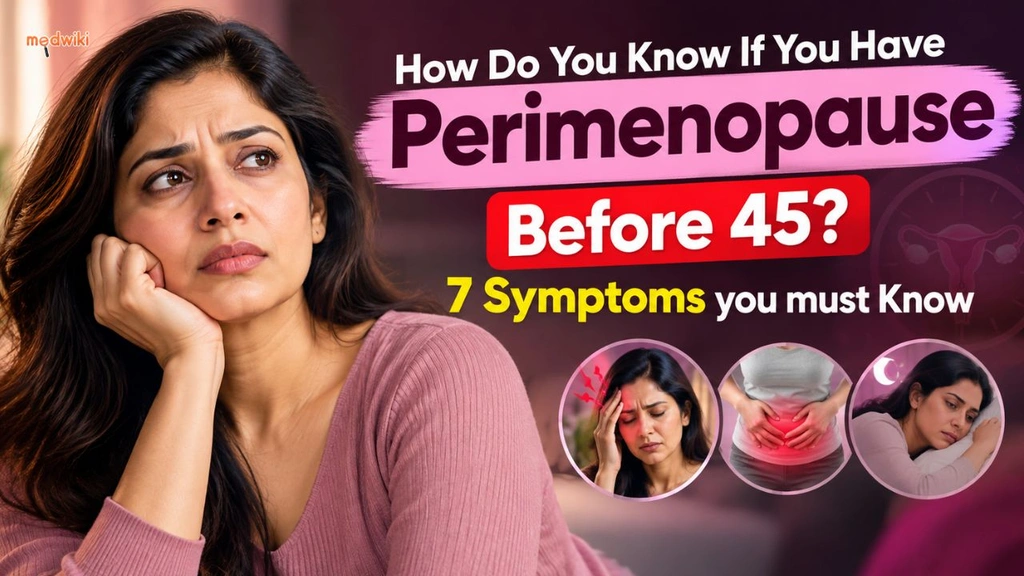
Changes in your periods, hot flashes, sleep problems, or mood changes before 45 may raise an important question:Could these be signs of perimenopause? While perimenopause usually occurs before menopause, some women may notice these changes earlier.Recognising these changes early can help women understand their symptoms and seek appropriate care.Perimenopause Symptoms Before 45 can include irregular periods, hot flashes, night sweats, mood changes, sleep difficulties, and fertility changes. Hormonal fluctuations can cause symptoms to appear differently from one woman to another.However, theseEarlyPerimenopause Symptoms can also have other causes. Understanding theSigns of Perimenopause can help you track changes and know when to seek medical advice.What Is Perimenopause?Perimenopause is the transitional stage before menopause when ovarian hormone levels begin to fluctuate and menstrual cycles gradually change. During this stage, periods may become irregular, lighter, heavier, shorter, or longer. Symptoms can appear even while periods are still occurring.Menopause is reached after12 consecutive months without a menstrual period, when the absence is not caused by another factor such as hormonal contraception. Perimenopause can last for several months or several years, and symptoms vary considerably between women.When these changes begin before 45, it is important to distinguishearly perimenopause symptoms from other conditions that can affect periods and hormones. Early menopause refers to menopause occurring between 40 and 45, while menopause before 40 is generally considered premature and may be associated with premature ovarian insufficiency.Perimenopause Before 45 vs Early Menopause: What Is the Difference?Perimenopause is the transition leading up to menopause, during which ovarian hormone levels can fluctuate and menstrual cycles may become irregular. It can begin before menopause and may last for several years.Early menopause is different. It means menopause occursbefore age 45, whileprematuremenopause refers to menopause occurringbefore age 40. Menopause itself is reached after 12 consecutive months without a menstrual period, when the absence of periods is not explained by another cause.Therefore, experiencing symptoms such as irregular periods, hot flashes, sleep problems, or mood changes before 45 does not automatically mean that menopause has already occurred. These symptoms may be related to perimenopause, early menopause, or another health condition.7 Early Signs of Perimenopause Before 45ThePerimenopause Symptoms in Women can differ in type and intensity. Some women experience only menstrual changes, while others notice several physical, emotional, and sleep-related symptoms.CommonSigns of Perimenopause include:Irregular Periods or Changes in Menstrual CycleOften one of the earliest noticeable changes; periods may become closer together, farther apart, lighter, or heavier.Hot Flashes and Night SweatsSudden episodes of feeling unusually hot, sometimes with sweating, palpitations, or dizziness.Sleep Problems and Night-Time WakingDifficulty falling asleep or staying asleep can occur, sometimes alongside night sweats.Mood Changes, Irritability or AnxietyHormonal fluctuations can be associated with mood changes, irritability, low mood, or anxiety.Brain Fog, Memory or Concentration ProblemsSome women notice difficulty concentrating, remembering things, or finding words.Vaginal Dryness and Changes in Sexual HealthHormonal changes can contribute to vaginal dryness, irritation, discomfort, and changes in sexual desire.Changes in Fertility or OvulationOvulation can become less predictable, making pregnancy more difficult but still possible while periods continue.TheseEarly Signs of Perimenopause are not specific to perimenopause, so symptoms alone do not always confirm the cause.Why Can Perimenopause Happen Before 45?Several factors may influence when menopause-related changes begin. While some women may have an identifiable reason for experiencing these changes earlier, others may not have a clear cause.Family history: Genetics may influence when menopause begins.Medical treatments: Chemotherapy and radiotherapy can affect ovarian function.Ovarian surgery: Procedures involving the ovaries may trigger earlier menopause-related changes.Health conditions: Certain medical conditions can affect ovarian function.Smoking: Smoking is associated with an increased likelihood of earlier menopause.Other causes: Symptoms before 45 do not always mean perimenopause; other causes of menstrual changes should be considered.If you notice menopause-like symptoms before 45, discussing them with a healthcare professional can help identify the underlying cause and determine whether further evaluation is needed.Can You Still Get Pregnant During Perimenopause?Fertility can change during perimenopause because ovulation may become less regular as ovarian function changes. However, ovulation can still occur, so pregnancy remains possible while periods are continuing.As reproductive function declines with age and ovulation becomes less predictable, the likelihood of pregnancy generally decreases. However, perimenopause isnot the same as infertility, and contraception is still needed if pregnancy is not desired.If menopause or significant menstrual changes occur before 45, medical evaluation is important because early menopause can have different causes and may affect reproductive health. Women who wish to become pregnant should discuss their individual fertility situation and options with a healthcare professional.How Is Perimenopause Treated? Treatment Options for Symptoms Before 45Perimenopause treatmentdepends on the symptoms, their severity, age, medical history, and individual health needs. Some people may not need medication if symptoms are mild, while others may benefit from hormonal or non-hormonal treatments.Hormone replacement therapy (HRT) can help manage several symptoms of perimenopause and menopause, including hot flashes, night sweats, sleep problems, and some vaginal symptoms. The type of HRT depends on factors such as whether you still have periods and whether you have had a hysterectomy.When menopause occurs before 45, it is consideredearly menopause and should be evaluated by a healthcare professional. HRT or another appropriate hormone treatment may be recommended in many cases, unless there is a medical reason it is unsuitable.Can Lifestyle Changes Help With Perimenopause Symptoms?Simple lifestyle changes may help manage someperimenopause symptoms and support overall health. Their benefits can vary from person to person.Stay physically active: Regular exercise supports overall health, mood, sleep, and bone strength.Eat a balanced diet: Include a variety of nutritious foods to support overall wellbeing.Prioritise sleep: Maintain a regular sleep routine and a comfortable, cool bedroom.Manage stress: Relaxation techniques, mindfulness, or other stress-management strategies may help.Avoid smoking: Stopping smoking supports overall health and may reduce health risks associated with earlier menopause.Identify hot-flash triggers: Keeping the bedroom cool and reducing personal triggers such as caffeine, alcohol, or spicy foods may help some women.These habits cannot prevent or stop perimenopause, but they can support physical and emotional wellbeing during the transition. If symptoms are persistent or affecting daily life, discuss treatment options with a healthcare professional.When Should You See a Doctor for Perimenopause Symptoms?Many perimenopause symptoms can be managed, but some changes should be checked by a healthcare professional. This is especially important when symptoms occur before age 45.Symptoms before 45: Discuss new menopause-like symptoms with a healthcare professional.Very irregular periods: Seek advice if your periods suddenly become very irregular or stop unexpectedly.Heavy bleeding: Very heavy or unusually prolonged bleeding should be evaluated.Bleeding between periods: Unexpected bleeding between periods should not automatically be attributed to perimenopause.Bleeding after sex: Report bleeding after sex to a healthcare professional.Severe pelvic pain: Persistent or severe pelvic pain requires medical evaluation.Symptoms affecting daily life: Seek help if symptoms significantly interfere with sleep, work, mood, or daily activities.A medical evaluation can help determine whether symptoms are related to perimenopause, early menopause, or another condition and guide appropriate treatment.ConclusionPerimenopause Symptoms Before 45 can include irregular periods, hormonal changes, hot flashes, sleep difficulties, mood changes, and fertility changes. Because similar symptoms can occur with several other health conditions, experiencing these changes does not automatically mean that you are in perimenopause.Recognising theEarly Perimenopause Symptoms and seeking appropriate medical advice can help identify the cause and provide suitable options for managing symptoms. With the right evaluation and support, women can better understand the changes occurring during this stage of reproductive health.FollowMedwiki for more health-related information, expert-backed insights, and practical tips to help you stay informed about your health.Frequently Asked Questions1.What are the first signs of perimenopause before 45?Irregular periods are often an early sign, along with hot flashes, night sweats, sleep problems, mood changes, and difficulty concentrating.2.Can you have perimenopause before 45?Yes, menopause-related changes can occur before 45. However, symptoms at this age should be evaluated to determine whether they are related to perimenopause, early menopause, or another condition.3.How do I know if my irregular periods are perimenopause?Irregular periods can occur during perimenopause, but they can also have other causes. A healthcare professional can assess your symptoms, menstrual history, and overall health.4.Can you still get pregnant during perimenopause?Yes. Ovulation can still occur during perimenopause, so pregnancy remains possible even when periods become irregular.5.What does a hot flash feel like during perimenopause?A hot flash is a sudden feeling of warmth, often affecting the face, neck, or chest, and may be accompanied by sweating or a noticeable heartbeat.6.What is the treatment for perimenopause symptoms?Treatment depends on your symptoms and health history and may include lifestyle changes, hormone therapy, or non-hormonal treatments recommended by a healthcare professional.7.When should you see a doctor for perimenopause symptoms?See a healthcare professional if symptoms occur before 45, periods change significantly, bleeding is unusually heavy or unexpected, or symptoms interfere with daily life.
1:15
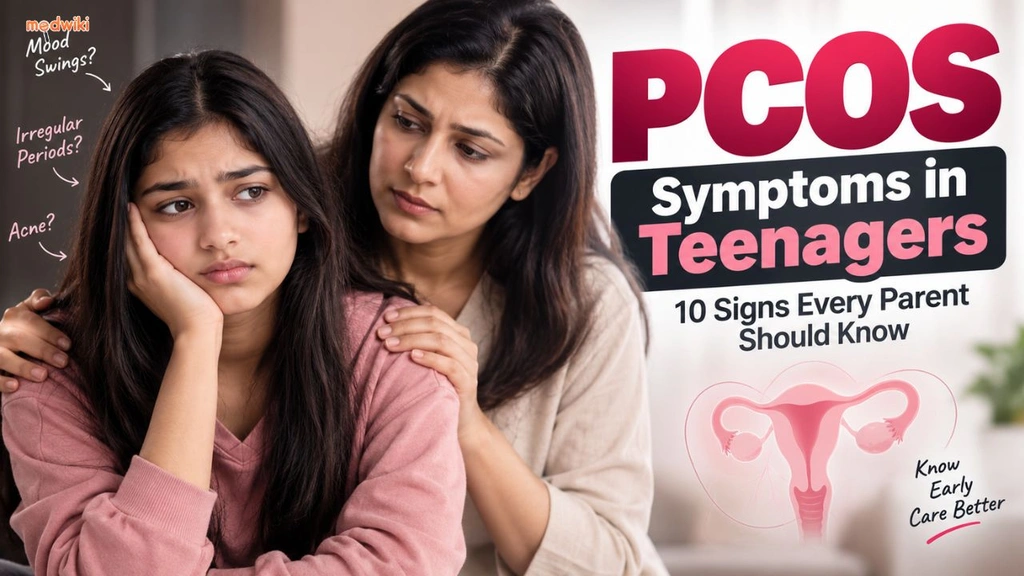
Irregular periods, stubborn acne, unwanted hair growth, or changes in weight can make a teenager or parent wonder,“Could this be PCOS?” Puberty itself causes major changes in hormones, periods, skin, and body development, so it is not always easy to tell what is normal and what needs medical attention.PCOS in teenagers can involve irregular menstrual cycles, problems with ovulation, and increased androgen activity. However, one symptom alone does not confirm PCOS. Because normal puberty can look similar toteenage PCOS, diagnosis requires an age-appropriate medical evaluation.What Are the Signs of PCOS in Teenagers?ThePCOS symptoms in teenagers can vary. Some teenagers mainly notice changes in their periods, while others may experience acne, increased facial or body hair, or other signs associated with higher androgen activity.Common signs that may need evaluation include:Persistentirregular periods: Periods that remain irregular over time may indicate problems with regular ovulation.Very long gaps between periods: Going more than 90 days without a period may need medical evaluation.Severe or persistent acne: Severe or ongoing acne may be associated with increased androgen activity.Excess facial or body hair: New or increased coarse hair growth on the face or body may indicate androgen excess.Scalp hair thinning: Noticeable thinning of scalp hair can sometimes occur with hormonal changes.Darkened skin around the neck: Dark, thickened skin around the neck or underarms may be associated with insulin resistance.Signs of insulin resistance: Changes in how the body responds to insulin may occur alongside PCOS-related metabolic changes.Changes in blood sugar: Abnormal blood sugar levels can be associated with metabolic problems linked to PCOS.Unhealthy cholesterol levels: Abnormal cholesterol levels may occur as part of metabolic changes associated with PCOS.Multiple hormonal symptoms together: Irregular periods combined with acne or excess hair growth may warrant further evaluation.These signs do not automatically mean a teenager has PCOS. Other hormonal conditions can cause similar symptoms.Can a 14-Year-Old Have PCOS?Yes,a 14-year-old can have PCOS, but diagnosing PCOS at this age requires particular care. Menstrual irregularity and acne are common during the early years of puberty and do not necessarily indicate a disorder.The number of years since the first period is important. A teenager who has recently started menstruating may naturally have irregular cycles while the reproductive system matures.PCOS becomes more concerning when menstrual irregularity persists beyond the expected pubertal transition and occurs together with clinical or biochemical signs of androgen excess.Is It Normal to Have Irregular Periods as a Teenager?Some irregularity is normal during adolescence, particularly during the first year after the first menstrual period. However, certain patterns should be discussed with a healthcare professional.For example:More than 90 days between periods one year after the first periodCycles shorter than 21 days or longer than 45 days during the period from 1 to less than 3 years after the first periodCycles shorter than 21 days or longer than 35 days more than 3 years after the first periodFewer than eight menstrual cycles per year more than 3 years after the first periodTherefore,irregular periods in teenagers and PCOS should be considered together with the teenager's stage of puberty and other symptoms rather than judged from one unusual cycle.How Do I Know If Irregular Periods Are Due to PCOS?Irregular periods can have many causes, including normal puberty, thyroid problems, significant changes in nutrition or exercise, stress, certain medications, and other hormonal conditions.PCOS is more strongly considered when persistent menstrual irregularity occurs alongsideclinical or biochemical hyperandrogenism.A healthcare professional may ask about:When periods first startedHow often periods occurAcne and hair growthChanges in scalp hairFamily historyMedications and other health conditionsOther symptoms suggesting hormonal or metabolic problemsThis helps distinguishPCOS in teenagers vs normal puberty and identify other possible causes.Does Acne Mean You Have PCOS?No.Acne alone does not mean a teenager has PCOS.Acne is extremely common during puberty because changing hormones stimulate oil production in the skin. However, severe acne occurring alongside persistent irregular periods or other signs of androgen excess may be worth discussing with a healthcare professional.This distinction is important because diagnosing PCOS based only on acne could result in unnecessary concern.What Causes PCOS in Teenagers?There is no singlePCOS cause in teenagers. PCOS is associated with interactions between genetics, hormones, androgen activity, insulin, and metabolism.Androgens are hormones naturally produced by females and males. In PCOS, increased androgen levels or effects can contribute to acne, excess hair growth, and problems with ovulation.Insulin resistance may also occur. When cells respond less effectively to insulin, the body may produce more insulin to maintain blood glucose levels. Higher insulin levels can influence ovarian androgen production in some people.Family history may also increase susceptibility to PCOS, although having a relative with PCOS does not mean a teenager will definitely develop it.Can PCOS Cause Weight Gain in Teenagers?PCOS and body weight can be related, butPCOS can occur at any body size. Being overweight is not required to have PCOS, and weight alone cannot diagnose or rule out the condition.Some teenagers with PCOS may experience metabolic changes or weight gain, while others may not.It is also important not to assume that a teenager's symptoms are caused by weight. Menstrual patterns, androgen-related symptoms, metabolic health, sleep, nutrition, physical activity, and overall well-being all deserve appropriate attention.How Is PCOS Diagnosed in Teenagers?How is PCOS diagnosed in teenagers? There is no single blood test that confirms PCOS.Current international recommendations indicate that adolescent PCOS requiresboth:Irregular menstrual cycles or ovulatory dysfunction appropriate to the time since menarcheClinical or biochemical hyperandrogenismOther possible causes of these symptoms should also be excluded.A healthcare professional may assess androgen levels, menstrual history, physical symptoms, and metabolic health. Total and free testosterone may be considered when biochemical hyperandrogenism needs to be evaluated.Is an Ultrasound Needed for Teenage PCOS?Usually, no. An ovarian ultrasound isnot recommended for diagnosing PCOS in adolescents because normal ovarian development during puberty can resemble polycystic ovarian morphology.Similarly, anti-Müllerian hormone (AMH) is not currently recommended as a diagnostic test for adolescent PCOS.A teenager who has only one feature, such as irregular periods or hyperandrogenism, may be consideredat increased risk of PCOS rather than immediately receiving a diagnosis and may need follow-up as they mature.What Happens If Teenage PCOS Is Not Managed?PCOS can have effects beyond irregular periods. Some people with PCOS have an increased risk of metabolic problems, including abnormal glucose regulation and cardiovascular risk factors.Potential concerns include:Insulin resistanceAbnormal blood glucose levelsUnhealthy cholesterol levelsHigh blood pressurePersistent irregular periodsProblems with ovulationFuture fertility difficultiesAnxiety, depression, or concerns about body imageThese risks do not mean every teenager with PCOS will develop complications. Individual risk varies, making appropriate follow-up important.When Should a Teenager See a Doctor?A teenager should consider medical evaluation when menstrual or hormonal symptoms are persistent, severe, or occur together.Talk to a healthcare professional if there is:Persistent irregular periods beyond the expected pubertal transitionVery long gaps between periodsSevere acne that persistsNew or increasing coarse facial or body hairScalp hair thinningSigns that may indicate insulin resistanceRapidly developing signs of androgen excessKeeping a record of period dates and symptoms can help make the medical assessment easier.ConclusionPCOS in teenagers can cause persistent irregular periods, skipped periods, severe acne, excess facial or body hair, scalp hair thinning, and other hormonal or metabolic changes. However, these symptoms can also occur during normal puberty, so one symptom alone does not confirmteenage PCOS.UnderstandingPCOS symptoms in teenagers and recognizing when they persist can help parents seek timely medical advice. Diagnosis may involve menstrual history, signs of androgen excess, blood tests, and evaluation for other conditions that can cause similar symptoms. Ultrasound alone is not recommended to diagnose PCOS in adolescents.With appropriate evaluation and management, teenagers with PCOS can receive support for menstrual, hormonal, and metabolic concerns. Parents should track persistent changes in periods and other symptoms and discuss them with a healthcare professional rather than attempting to diagnosePCOS in teenagers at home.Frequently Asked Questions1. What are the first signs of PCOS in teenage girls?Persistent irregular periods together with signs of androgen excess, such as significant acne or increased facial or body hair, may raise concern about PCOS.2. Can a 15-year-old have PCOS?Yes. PCOS can occur during adolescence, but diagnosis requires consideration of the teenager's menstrual development and signs of androgen excess.3. Can a teenager have PCOS with regular periods?PCOS is commonly associated with ovulatory dysfunction, but menstrual patterns alone do not always reveal whether ovulation is occurring regularly. Medical evaluation can determine whether further testing is appropriate.4. Can PCOS occur without obesity?Yes. PCOS can occur at different body sizes, and obesity is not required for diagnosis.5. Does every teenager with PCOS have insulin resistance?No. Insulin resistance is associated with PCOS but does not occur in everyone with the condition.6. Can PCOS cause acne in teenagers?PCOS can contribute to acne through increased androgen activity, but acne is also a normal and common part of puberty and cannot diagnose PCOS by itself.7. What tests are done for PCOS in teenagers?Evaluation may include menstrual history, physical assessment, androgen testing, and tests for other conditions that can cause similar symptoms. Metabolic assessment may also be considered.
1:15
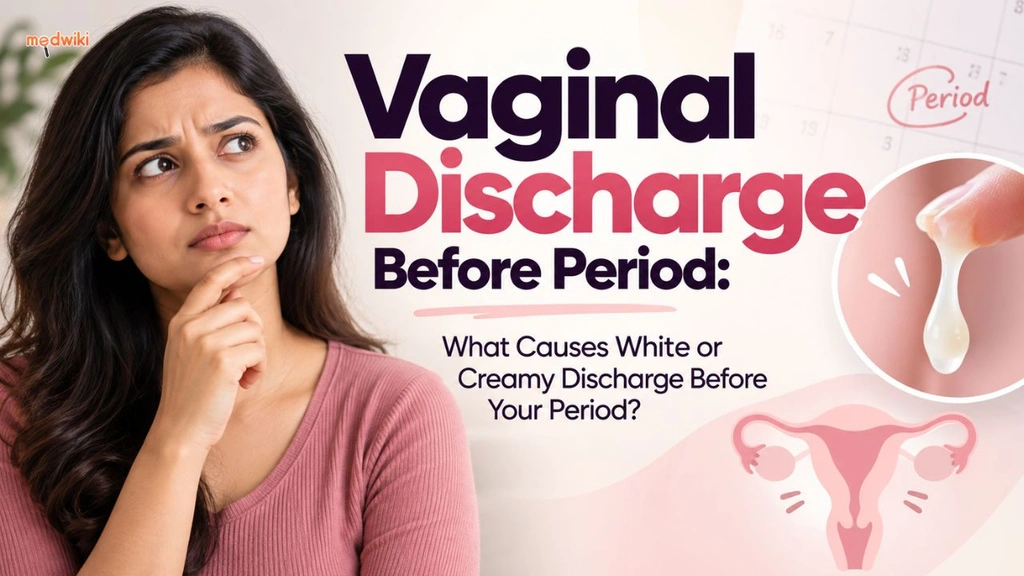
Vaginal discharge can change in amount, color, and consistency throughout themenstrual cycle. Before a period, some people may notice white, creamy, or slightly thicker discharge as hormone levels change and the body prepares for menstruation.White discharge before period is often a normal part of the menstrual cycle. The discharge may appear white or off-white and can become thicker or creamier during certain phases of the cycle. These changes are influenced by hormones and cervical mucus production.However, not every change in discharge is normal.Abnormal vaginal discharge may have a strong or unpleasant odor, unusual color, or occur with itching, burning, irritation, or pain. Understanding these differences can help identify when discharge is part of a normal cycle and when it may need evaluation.Why Do You Have Vaginal Discharge Before Your Period?Discharge before period can occur because hormone levels change during the menstrual cycle. These hormonal changes influence the cervix and the amount and consistency ofcervical mucus produced.As the period approaches, discharge may become thicker, creamier, or less slippery than it is around ovulation. Some people may notice more discharge than usual, while others may notice very little.Normal discharge should generally not cause significant itching, burning, pain, or a strong unpleasant odor. If these symptoms develop or the discharge changes considerably from what is usual for you, the cause may be something other than normal menstrual-cycle changes.What Is Normal Vaginal Discharge Before a Period?Normal vaginal discharge can vary from clear to white or off-white and may change in texture throughout the menstrual cycle. Before a period, it may become creamy, sticky, or thicker because of hormonal fluctuations.White or off-white discharge can be normal before menstruation.Creamy discharge may occur as the period approaches.Mild changes in amount can happen from one cycle to another.Slightly thicker discharge may occur during certain parts of the cycle.No strong unpleasant odor is generally expected with normal discharge.No significant itching or burning usually accompanies normal discharge.The appearance of discharge can differ between people and even between menstrual cycles. What is normal for one person may not look exactly the same for another.Why Is Creamy Discharge Present Before Your Period?Creamy discharge before period is commonly related to changes in estrogen and progesterone during the menstrual cycle. These hormones affect cervical mucus and can make vaginal discharge appear thicker or more lotion-like.Hormonal changes can affect the amount and consistency of vaginal discharge.After ovulation, discharge may become thicker as hormone levels change.Creamy or lotion-like discharge can occur during the later part of the cycle.Normal vaginal bacteria can influence the usual appearance and odor of discharge.Different menstrual cycles may produce slightly different discharge patterns.Lack of irritation or pain generally supports that the discharge may be part of normal cycle changes.Creamy discharge by itself is usually not a sign of an infection when it does not have a strong unpleasant odor and is not accompanied by itching, burning, irritation, or pain.How Does Cervical Mucus Change Before a Period?Cervical mucus before period can look different from the mucus produced around ovulation. Hormonal changes during the cycle influence whether the mucus is thin and slippery or thicker and less stretchy.Clear and slippery mucus may occur around the time of ovulation.Stretchy cervical mucus can be associated with the fertile phase.Thicker mucus may appear after ovulation.Creamier discharge can occur later in the menstrual cycle.Reduced slipperiness may occur as hormone levels change.Mucus patterns can vary naturally between different cycles.These changes mean that discharge can provide clues about different stages of the menstrual cycle, but discharge alone cannot reliably determine exactly when a period will begin.What Causes Abnormal Vaginal Discharge?Abnormal vaginal discharge may involve changes in color, consistency, smell, or amount that are unusual for you. Discharge may also become concerning when it occurs with itching, burning, irritation, pelvic discomfort, or pain.Strong or unpleasant odor may indicate an underlying vaginal condition.Yellow or green discharge may need medical evaluation.Thick, unusual discharge may occur with some infections.Itching or irritation can accompany abnormal discharge.Burning during urination may occur with some vaginal or urinary conditions.Pelvic pain with unusual discharge should be evaluated.The appearance of discharge alone cannot determine the exact cause. A healthcare professional may consider the discharge, accompanying symptoms, menstrual history, and other findings before deciding whether testing or treatment is needed.Can a Yeast Infection Cause Changes in Vaginal Discharge?Yes, ayeast infection can cause changes in vaginal discharge and may also produce significant itching or irritation. The discharge may become thicker and have a different appearance from the person's usual discharge.Thick white discharge can occur with a yeast infection.Intense itching may affect the vulva or vaginal area.Redness or irritation can develop around the affected area.Burning may occur, including during urination.Vaginal discomfort may become more noticeable.Changes from your usual discharge can be an important clue.Not every thick or white discharge means there is a yeast infection. Symptoms can overlap with other vaginal conditions, so persistent or recurring symptoms may require evaluation rather than self-diagnosis.What Can You Do About Unusual Vaginal Discharge?The appropriate approach depends on the cause of the discharge. Normal cycle-related discharge usually does not require treatment, while discharge caused by an infection or another condition may need specific medical care.Keep the genital area clean using gentle hygiene practices.Avoid irritating products that may disturb the normal vaginal environment.Wear breathable underwear to help reduce excess moisture.Track discharge changes alongside your menstrual cycle.Avoid self-treating persistent symptoms without knowing the cause.Seek medical advice when discharge remains unusual or symptoms worsen.Treatment should be based on the underlying cause rather than the appearance of discharge alone. A healthcare professional can determine whether testing or medication is appropriate.When Should You See a Doctor for Vaginal Discharge?Changes in discharge are often part of the normal menstrual cycle, but persistent or unusual changes may need evaluation. Medical attention is especially important when discharge occurs with pain, fever, significant irritation, or other concerning symptoms.Strong-smelling discharge should be evaluated if the odor is persistent or unusual.Yellow, green, or otherwise unusual discharge may require assessment.Severe itching or burning should not be ignored.Pelvic or lower abdominal pain with discharge requires medical attention.Bleeding outside your expected period should be discussed with a healthcare professional.Persistent or recurring abnormal discharge may need testing to identify the cause.A healthcare professional may ask about the timing, appearance, odor, and duration of the discharge. Depending on the symptoms, an examination or laboratory testing may be recommended to identify an infection or another condition.ConclusionVaginal discharge before period commonly changes because hormones affect cervical mucus throughout the menstrual cycle. White or creamy discharge without a strong odor, significant itching, burning, or pain can often be part of normal cycle-related changes.The appearance ofwhite discharge before period may differ from the clearer, wetter mucus that can occur around ovulation. However,unusual odor, color, irritation, pain, or persistent changes may suggest abnormal vaginal discharge and should not automatically be considered a normal part of the menstrual cycle.Paying attention to your usual discharge pattern can help you recognize changes from one cycle to another. Anyone experiencing persistent abnormal discharge, significant discomfort, pelvic pain, or other concerning symptoms should speak with a healthcare professional for appropriate evaluation.Frequently Asked Questions1. Is white discharge before a period normal?Yes, white or off-white discharge can be normal before a period. Hormonal changes may make vaginal discharge thicker or creamier as menstruation approaches.2. Why do I have creamy discharge before my period?Creamy discharge before a period can occur because hormonal changes affect cervical mucus. The discharge may become thicker and less slippery after ovulation.3. What does normal vaginal discharge look like before a period?Normal discharge may be clear, white, or off-white and can vary in thickness. Before a period, it may become creamier or thicker without causing significant irritation or a strong odor.4. Can ovulation discharge look different from discharge before a period?Yes. Ovulation discharge is often clearer, wetter, and more slippery, while discharge later in the cycle may become thicker or creamier.5. Can a yeast infection cause white discharge?Yes, a yeast infection can cause thick white discharge along with itching, irritation, redness, or burning. However, white discharge alone does not confirm an infection.6. What makes vaginal discharge abnormal?Discharge may be considered abnormal when it has an unusual color or strong odor or occurs with itching, burning, irritation, pain, or other new symptoms.7. When should I see a doctor for discharge before my period?See a healthcare professional if discharge is persistent, strongly odorous, unusually colored, or accompanied by itching, burning, pelvic pain, fever, or unexpected bleeding.
1:15
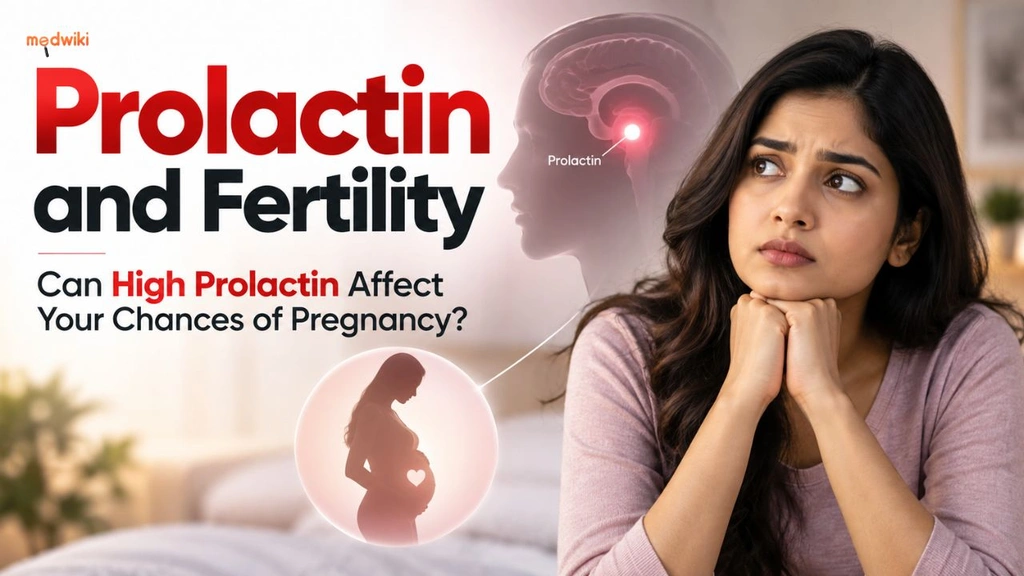
Prolactin is a hormone produced mainly by the pituitary gland and is best known for its role in breast development and milk production. It also interacts with other reproductive hormones, so changes in prolactin levels can sometimes affect fertility in both women and men.When prolactin levels become higher than expected outside pregnancy or breastfeeding, they may interfere with normal reproductivehormone activity.High prolactin and fertility can be connected through changes in menstrual cycles, ovulation, sperm production, testosterone, or sexual function.Not every abnormal prolactin result means that a person has a fertility problem. Prolactin levels can temporarily change because of stress, certain medicines, pregnancy, breastfeeding, or other factors. Understanding the underlying cause of an abnormal result is important before treatment is considered.What Is Prolactin and Why Is It Important?Prolactin hormone is produced by the pituitary gland, a small gland located at the base of the brain. Its most recognized function is stimulatingbreast milk production after childbirth, but prolactin also has effects on reproductive and other body processes.Prolactin interacts with hormones involved in the menstrual cycle and reproductive function. Normally, its production is regulated by the hypothalamus, particularly through dopamine, which helps keep prolactin levels under control.During pregnancy, prolactin levels naturally increase to prepare the breasts for breastfeeding. Outside pregnancy and breastfeeding, persistently elevated levels may interfere with the hormonal signals involved in ovulation and fertility.What Are Normal Prolactin Levels?Normal prolactin levels vary according to factors such as sex, pregnancy status, laboratory methods, and the reference range used by a particular laboratory. Results should therefore be interpreted using the range provided with the blood test.Prolactin levels in women may differ depending on pregnancy and breastfeeding status.Prolactin levels in men are generally lower than those seen during pregnancy.Pregnancy naturally causes prolactin levels to rise.Breastfeeding can keep prolactin elevated.Laboratory reference ranges can vary between testing facilities.Aprolactin blood test measures the amount of prolactin circulating in the blood. Because levels can fluctuate, a healthcare professional may recommend repeat testing when a result is unexpectedly high Stress, exercise, breast stimulation, and certain medicines may also affect the result.What Are the Symptoms of High Prolactin?High prolactin symptoms can vary depending on how elevated the hormone is and whether it affects other reproductive hormones. Some people may have no symptoms, while others notice reproductive or sexual changes.Irregular periods may occur when high prolactin interferes with reproductive hormones.Absent periods can occur when ovulation is disrupted.Unexpected breast milk production may occur outside pregnancy or breastfeeding.Reduced sexual desire may occur in some people.Difficulty becoming pregnant may occur when ovulation or reproductive function is affected.Symptoms alone cannot confirm hyperprolactinemia. A blood test is needed to determine whether prolactin is elevated.Can High Prolactin Cause Irregular Periods and Affect Ovulation?Yes, elevated prolactin can interfere with the hormonal signals that regulate themenstrual cycle. This may lead to irregular periods, less frequent ovulation, or periods stopping altogether.Prolactin andirregular periods can be connected when elevated prolactin interferes with reproductive hormones.High prolactin and ovulation may be associated with reduced or absent ovulation.Prolactin and menstrual cycle changes can make conception more difficult.Irregular cycles may indicate that ovulation is not occurring regularly.Ovulation problems can have many other causes besides prolactin.Not every person with an elevated prolactin level will have the same symptoms. The impact depends on the level, duration, underlying cause, and other hormonal factors.Can High Prolactin Affect Pregnancy?Prolactin and pregnancy have a natural relationship because prolactin normally increases during pregnancy and supports breast development and preparation for breastfeeding.However, elevated prolactin before conception can sometimes interfere with ovulation and make it harder to become pregnant.High prolactin and pregnancy may be relevant when elevated levels interfere with ovulation before conception.Pregnancy-related prolactin changes are normally expected.Breastfeeding can also keep prolactin levels elevated.Ovulation disruption may make conception more difficult.The meaning of an elevated prolactin result depends on whether someone is pregnant, breastfeeding, or trying to conceive. A healthcare professional can determine whether the level is expected or requires further investigation.Can Prolactin Affect Male Fertility and Sperm Count?Prolactin also plays a role in male reproductive function, although excessive levels can interfere with normal reproductive hormones.Prolactin and sperm count may be connected when high prolactin affects testosterone production or other hormonal pathways.Elevated prolactin levels may affect reproductive hormone balance.Sperm production depends on coordinated hormonal signals.Sperm count can be affected by many factors beyond prolactin.Low testosterone may occur in some men with elevated prolactin.Sexual dysfunction can sometimes accompany hormonal abnormalities.Men with persistently elevated prolactin may need additional hormone testing and, when appropriate, a semen analysis. Treating the underlying cause may help improve reproductive function when prolactin is contributing to the problem.What Causes Elevated Prolactin Levels?There are several possible causes ofelevated prolactin levels, and identifying the cause is important because treatment depends on what is responsible.Pregnancy and breastfeeding naturally increase prolactin.Certain medicines can raise prolactin levels.Thyroid disorders can sometimes be associated with elevated prolactin.Pituitary conditions can cause persistent hormone elevation.Prolactinoma is a usually benign pituitary tumor that produces excess prolactin.A prolactinoma develops in the pituitary gland and can cause high prolactin levels. Larger tumors may also cause headaches or vision problems because of their location near structures involved in vision.Is Prolactin Linked to PCOS?The relationship betweenprolactin and PCOS is not straightforward. PCOS can cause irregular periods and ovulation problems, which may resemble some of the reproductive effects associated with high prolactin.Mild prolactin elevation may sometimes occur in people with PCOS, but elevated prolactin should not automatically be attributed to PCOS. Other possible causes need to be considered.When someone has irregular periods and an elevated prolactin level, a healthcare professional may evaluate both conditions separately. This can help determine whether prolactin, PCOS, another hormonal disorder, or a combination of factors is affecting ovulation.How Is High Prolactin Treated?Hyperprolactinemia treatment depends on the underlying cause, the prolactin level, symptoms, and whether fertility is a concern.Treating an underlying thyroid problem may help normalize prolactin when thyroid dysfunction is responsible.Reviewing medicines may be appropriate when a medication is contributing to elevated levels.Dopamine agonist medicines may be used in some people with persistent hyperprolactinemia or prolactinoma.Pituitary imaging may be recommended when a pituitary cause is suspected.Specialist care may be needed for persistent or significantly elevated levels.Treatment should be individualized. The goal may be to reduce prolactin, restore normal reproductive hormone function, manage symptoms, or treat an underlying pituitary condition.Can Treating High Prolactin Improve Fertility?When elevated prolactin is interfering with ovulation or reproductive hormone function, treating the underlying cause may help restore more regular reproductive function.In women, lowering persistently elevated prolactin may allow ovulation and menstrual cycles to become more regular when hyperprolactinemia was the cause of the problem. In men, treating an underlying prolactin disorder may improve hormonal and sexual function in some cases.However, fertility depends on many factors. Even when prolactin is corrected, other reproductive or health-related factors may still affect conception.Prolactin fertility treatment should therefore be based on a complete evaluation rather than prolactin levels alone.ConclusionProlactin and fertility are connected because prolactin interacts with reproductive hormone pathways in both women and men. When prolactin becomes persistently elevated outside pregnancy or breastfeeding, it can sometimes interfere with ovulation, menstrual cycles, sperm production, testosterone, or sexual function.High prolactin can have several causes, including medicines, thyroid problems, and pituitary conditions such as prolactinoma. A single elevated result does not always mean that a person has a fertility problem or a pituitary disorder.Appropriate testing can help identify the underlying cause, while treatment may restore reproductive function when hyperprolactinemia is responsible. Anyone experiencing irregular periods, difficulty conceiving, unexpected milk production, or reproductive symptoms should discuss appropriate evaluation with a healthcare professional.Frequently Asked Questions1. Can high prolactin affect fertility?Yes, persistently high prolactin can interfere with reproductive hormone signals and may affect ovulation, menstrual cycles, sperm production, or sexual function.2. What are the symptoms of high prolactin?Symptoms can include irregular or absent periods, unexpected breast milk production, reduced sexual desire, fertility problems, and hormonal or sexual changes in men.3. What are normal prolactin levels?Normal prolactin ranges vary between laboratories and depend on factors such as sex, pregnancy, and breastfeeding. Results should be interpreted using the laboratory's reference range.4. Can high prolactin affect ovulation?Yes, elevated prolactin can interfere with reproductive hormone signaling and may reduce or prevent regular ovulation in some women.5. Can high prolactin affect sperm count?High prolactin may interfere with male reproductive hormones and can sometimes affect sperm production. Other causes of abnormal sperm count should also be considered.6. What is a prolactinoma?A prolactinoma is a usually benign pituitary tumor that produces excess prolactin. It can cause elevated prolactin and, depending on its size, may cause symptoms such as headaches or vision problems.7. Can treating high prolactin improve fertility?When high prolactin is the cause of disrupted ovulation or reproductive hormone problems, appropriate treatment may help restore reproductive function. Other fertility factors may still need to be evaluated.
1:15
A high body temperature during a febrile illness can temporarily affect the process of sperm production.Fever and sperm quality may be linked because developing sperm cells are sensitive to changes in temperature, and a significant fever can temporarily affect semen parameters.The effects may not appear immediately after the illness. Changes insperm concentration, motility, and morphology can become noticeable several weeks after a fever because sperm development takes time.Most fever-related changes in semen quality are temporary and may improve as new sperm are produced. However, persistent fertility concerns or abnormal semen results should be evaluated by a healthcare professional rather than assumed to be caused only by a previous fever.Why Can Fever Affect Sperm Quality Even After You Recover?The effects of fever on semen may appear after the illness has ended because sperm cells develop over several weeks. Disruption occurring during sperm development may therefore become visible in a semen sample later rather than immediately after the fever.A significant rise in body temperature can affect developing sperm cells even after other symptoms of the illness have improved. This is one reasonhigh fever effects on fertility may be delayed rather than noticeable during the illness itself.This delayed effect is important when interpreting asemen analysis after an illness. A recent fever should be mentioned to a healthcare professional because it may help explain a temporary abnormal result.How Does Fever Affect Sperm Production?Sperm production, known asspermatogenesis, occurs continuously in the testicles and requires a temperature slightly lower than core body temperature. A fever can temporarily raise body andscrotal temperature, creating conditions that may interfere with developing sperm cells.Increased body temperature can affect developing sperm cells.Testicular temperature may rise during a high fever.Sperm production can temporarily become less efficient.Sperm concentration may decrease after a significant febrile illness.Sperm motility can be affected during recovery.Sperm morphology may temporarily change after fever.The severity and duration of fever can influence the extent of semen changes. Individual responses can vary considerably, so one fever episode does not affect every person in exactly the same way.Does Fever Affect Sperm Count?Yes, a significant fever can temporarily reducesperm count or sperm concentration. The effect may depend partly on the intensity and duration of the fever and the stage of sperm development affected.High fever and sperm count may be associated with a temporary decline in concentration.Longer fever episodes may have a greater effect on semen quality.Sperm concentration may fall several weeks after illness.Total sperm count can also be temporarily reduced.Individual responses can vary substantially.Recovery may occur as new sperm are produced.A temporary decrease in sperm count does not automatically mean permanentmale infertility. If an abnormal semen result occurs after a recent fever, repeat testing may be considered by a healthcare professional.Can Fever Affect Sperm Motility and Morphology?Fever can affect more than sperm count. Changes may also occur insperm motility andsperm morphology, which describe how sperm move and their physical structure.Reduced motility can affect how effectively sperm move.Progressive motility may decrease after a significant fever.Sperm morphology refers to the shape and structure of sperm.Abnormal morphology may temporarily increase after fever.Motility changes may appear weeks after the illness.Recovery can occur as new sperm replace affected cells.An abnormal sperm parameter after a recent fever does not necessarily indicate a long-term fertility problem. Semen quality can vary between samples, so results should be interpreted in the context of the person's medical history.Can Fever Cause Sperm DNA Damage?A significant fever may also affect sperm DNA integrity. Research has observed temporary changes insperm DNA fragmentation following febrile illness, although the extent and duration can vary.High body temperature can place stress on developing sperm cells.Oxidative stress may contribute to cellular damage.Sperm DNA integrity can be affected during some febrile illnesses.DNA fragmentation may temporarily increase after fever.Recovery may occur as new sperm develop.Testing may be considered when fertility concerns persist.Sperm DNA testing is not routinely required after every fever. A healthcare professional can determine whether additional fertility testing is appropriate based on the overall situation.Does Fever Cause Temporary Infertility?A high fever does not usually cause permanent infertility by itself. However, a substantial febrile illness can temporarily reduce semen quality enough to affect fertility during the recovery period.Temporaryinfertility may occur when semen parameters are significantly reduced.Fever severity can influence the degree of sperm impairment.Duration of illness may also affect semen quality.Sperm production continues after the illness has resolved.Semen quality can recover as new sperm replace affected cells.Other fertility factors can also influence the ability to conceive.A history of fever is therefore important when evaluating male fertility. Persistent fertility problems should not automatically be attributed to a past fever because male fertility can be affected by many different factors.How Long Does It Take for Sperm to Recover After a Fever?Recovery time varies depending on the severity of the illness and the extent of the effect on sperm production. Because sperm development takes several weeks, semen quality may remain temporarily altered even after the person feels completely well.Changes may appear weeks after fever rather than immediately.Sperm production continues after recovery from the illness.New sperm gradually replace affected sperm over time.Motility may improve as recovery progresses.Sperm concentration can return toward baseline in many cases.Repeat semen analysis may help assess recovery when clinically appropriate.Many fever-related changes are temporary and may improve as the sperm-production cycle continues. However, recovery time can differ between individuals, particularly after severe or prolonged illness.What Can a Semen Analysis Show After Fever?Asemen analysis evaluates several aspects of semen and sperm quality and can help identify whether a recent illness may have affected reproductive parameters. It may assess sperm concentration, movement, morphology, and other characteristics.Sperm concentration measures the number of sperm present.Total sperm count considers the overall number in the sample.Sperm motility evaluates how sperm move.Sperm morphology assesses sperm shape and structure.Semen volume measures the amount of semen produced.Additional testing may be considered when clinically indicated.A single semen analysis does not provide a complete assessment of fertility. If testing is performed soon after a significant fever, the healthcare professional may consider the timing of the illness when interpreting the results.When Should You See a Doctor About Fever and Fertility?A previous fever is usually not a reason for immediate concern, particularly when recovery is otherwise normal. However, medical evaluation may be appropriate when fertility concerns continue or semen results remain abnormal.Persistent abnormal semen results should be evaluated.Difficulty conceiving may require assessment of both partners.Repeated high fevers may warrant investigation of the underlying cause.Persistent testicular pain or swelling should be medically assessed.Fertility concerns after illness can be discussed with a healthcare professional.Unexplained male infertility may require a broader fertility evaluation.A healthcare professional can determine whether fever likely contributed to the changes or whether another factor may be affecting sperm quality.ConclusionFever and sperm quality can be connected because increased body and testicular temperature may temporarily interfere with sperm production. High or prolonged fever may affect sperm count, motility, morphology, and in some cases sperm DNA integrity.The effects are often delayed because sperm development takes several weeks. In many cases, semen quality gradually improves as new sperm are produced, although recovery time varies between individuals.A recent fever should be mentioned when discussing fertility or interpreting a semen analysis. Persistent abnormalities or difficulty conceiving should be evaluated by a healthcare professional rather than assumed to be caused by a previous illness.Frequently Asked Questions1. Does fever affect sperm count?Yes, a significant fever can temporarily reduce sperm concentration and total sperm count. The effect may become noticeable several weeks after the illness.2. Can a high fever cause temporary infertility?A high fever can temporarily reduce semen quality enough to affect fertility in some cases. This does not usually mean permanent infertility.3. How long does sperm take to recover after a fever?Recovery varies, but semen quality may improve over the following months as new sperm are produced. The timing depends on the severity of the fever and individual recovery.4. Can fever affect sperm motility?Yes, fever can temporarily reduce sperm motility, including progressive movement. Motility may improve as sperm production recovers.5. Can fever cause sperm DNA damage?A significant febrile illness may temporarily affect sperm DNA integrity. However, changes vary between individuals and do not necessarily indicate permanent damage.6. Should I wait before having a semen analysis after a fever?A recent fever can affect semen results for several weeks. A healthcare professional can advise when testing is most useful based on the timing and severity of the illness.7. When should I see a doctor about fertility after a fever?Medical advice is appropriate when semen results remain abnormal, fertility concerns persist, conception is difficult, or symptoms such as testicular pain or swelling occur.

Know Us
@2026 Medwiki Pvt Ltd. All Rights Reserved